Eating from Bantry

As always lunch on Friday was from Bantry market.

At first it had felt warmer in the morning but then the wind had caught up and there was no sun to soften the chill. In the car on the way down to Durrus we were insulated from the cold and the sea was blue and looked almost inviting.

In Bantry the stalls were grouped up at the top end of Wolfe Tone Square but that did not spare them and the wind whipped at the canvas and the people curled their heads down to keep warm.

I panicked for a moment that the fish stall was not at its usual place but it was over the other side of the pavement and there were piles of whiting, cod, haddock and hake E5.00 a bag and monkfish tails and mussels. Three men worked the stall, one at the front with a set of scales and the raw fish and two at the back with sharp knives, pulling the fish from the ice in their crates and skinning and filleting them to go in the bags. They were all dressed against the cold and they went about their business quietly without chat in the raw wind.

Wally was on the olive stall and despite the bet we had made last summer he did not remember my name. The olive oil in the bottles was cloudy and stiff from the cold and it felt out of place buying from there in the cold. It needed some sun to bring out its colours.

At the Gubbeen stall I stocked up on bacon to take home with me, a combination of maple cure and smoked streaky and some smoked cheese to take back with me.

I also bought the ingredients for supper: two small monkfish tails and a bag of mussels, some smoked salmon and smoked sun dried tomatoes, all to be had with pasta.

Before the main course we had scallops with bacon. Five juicy scallops cut in half and a rasher of bacon. I cut the bacon into small strips and fried it until it started to give off its fat. I then added the scallops and cooked them on a high heat until they had just started to brown. I quickly seasoned them with salt and pepper and a drop of wine before serving them with some finely chopped parsley. Unfortunately Galen likes them now so there was less for me.

In the meantime I had cooked the mussels in white wine and garlic, drained them, reserving the juices and pulled each of them from its shell. In the same pan I had cooked the scallops I heated some olive oil, when hot I tipped in the monkfish tails which I had chopped so they were about an inch across, as they started to firm I added the mussels and their juices. Just before the pasta was cooked I added the smoked tomatoes and salmon which I had roughly chopped. As I stirred the sauce into the pasta I mixed in some chopped feta cheese.

It all got eaten.

Driving across Ireland and the morning

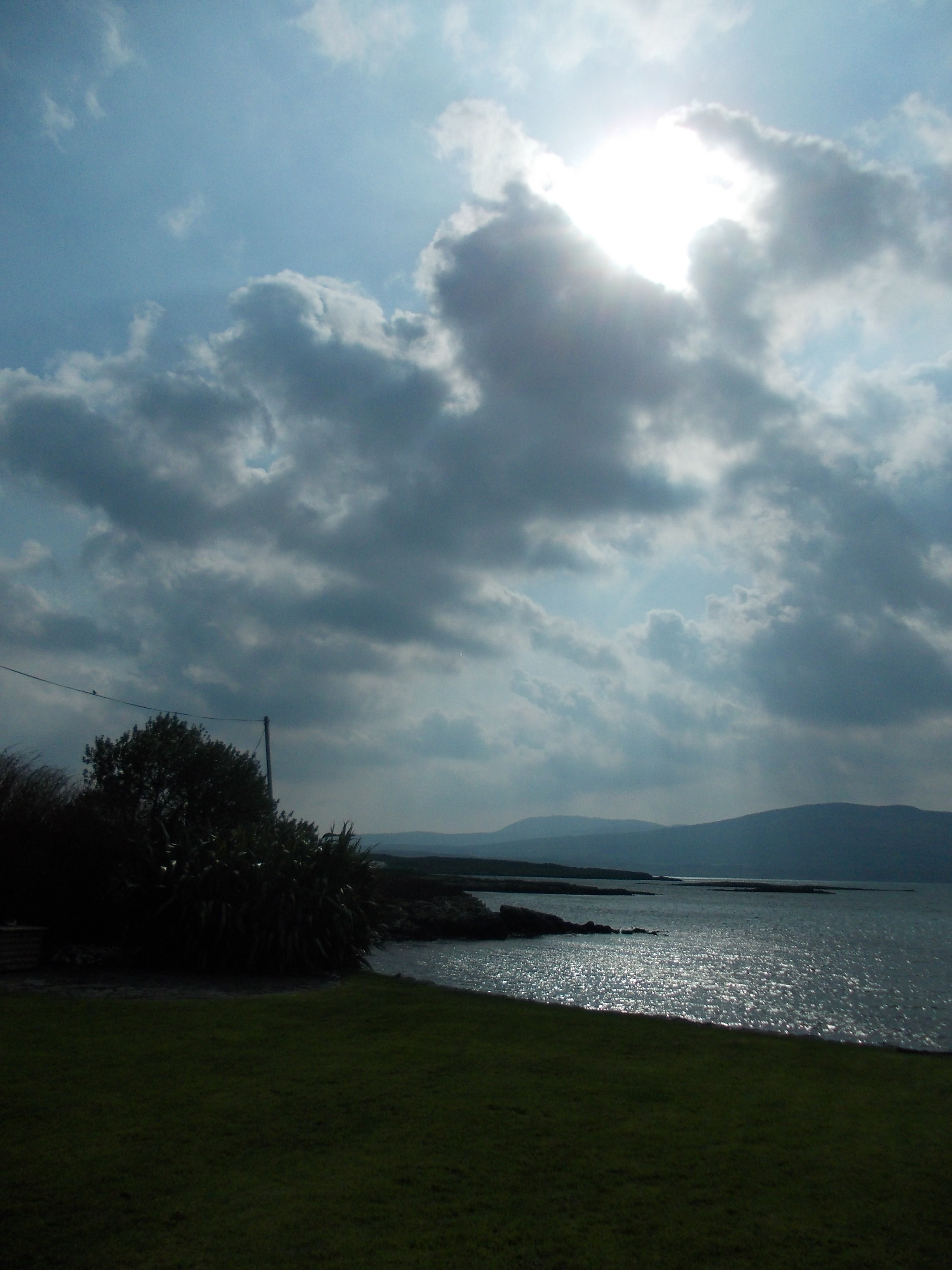
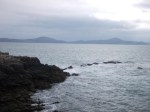
There is a raw feel to the place as if the wind and cold of the winter months have scoured the place clean. The pier has lost the smell of bad fish and looks clean and bright in the morning light.

We arrived in Dublin Port at just after midnight and got lost getting out of the city. I thought signs for the south would take us in the direction we needed to go but we managed to end up in Dun Lourgie, but from there we found the ring road and were then onto the N7 into the centre of Ireland. Ten years ago the journey would take 6 hours but now with the new dual carriageways and the by-passes that that miss out all of the towns on the way down to Cork it can be done in four.

There was snow in the air in Dublin but once we were out of the City the sky cleared and for the whole journey down the sky was clear and a full moon hung in the west leading us on. There was hardly any traffic on the rod until we got to Durrus when a car pulled out behind us from the Crookhaven Road. It followed us all the way to Ahakista even onto the pier. It was Joe, Tommy’s mate, so as we were arriving at 4.45 in the morning the fishermen were coming out to go do their work on the water.

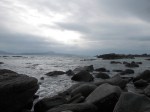
We went straight to bed on arriving without even giving ourselves time to walk up the pier. Three hours water it was light. The tide was low and the sun was out and it has been brighter than the first day we were here last summer when we awoke to grey and wet. Down by the rocks two great black backed gulls looked out to sea owning the place.


On the ferry

I am conscious that it has been a quiet few days from here. We have had friends to stay and time has been taken up getting ready to go back to Ahakista for a few days over Easter.

There was one point this afternoon looking out of the window and watching the thick flakes of snow come down that I wondered if we would make it. But the snow did not stick and for a while the sun came out. On the drive along the A55 the snow was banked up at the side of the road. It would have been an interesting journey over last weekend.

We are now on the ferry and it is underway taking on a gentle roll as we move out of Holyhead. There are flurries of snow outside and my mind keeps going back to the last few words of James Joyce’s short story The Dead and the snow being general over the west of Ireland. Words to be read as my ashes are dumped in the wind over Dunmannus Bay.

We should be in Dublin just past midnight and then it is the 5 hour drive across country so that we arrive in Ahakista in the early morning as it starts to get light and the sun rises over the hills around Dunmannaway. Hopefully I won’t fall asleep.

Apart from Sunday linch in The Good Things Cafe we have nothing planned. there will no doubt be a few pints drunk at the bar in Arundel’s and at a push we may make it to Schull for lunch in Hackett’s and a BLT sandwich made with Gubbeen bacon. There will be more bacon for breakfast with black pudding and dollops of brown sauce.

On Friday we will go to Bantry Market and stock up on Gubbeen cheese to take home with us and fresh fish from the fish stall to cook in the evening. Hopefully Tommy will still be fishing for scallops and I will cook those with chorizo sausage and somewhere we will pick up some prawns.

The weather forecast is cold but dry. It should be a good few days.

Extending Ahakista Pier

Dáil Éireann Debate Thursday 4 November 1982

Ceisteanna

Question. Written Answers – Ahakista Pier (Cork) Improvement Works

J. Walsh: asked the Minister for Fisheries and Forestry the progress made regarding the carrying out of improvement works to Ahakista Pier in County Cork.

Minister for Fisheries and Forestry (Mr. Daly):  My Department have considered substantial improvement works suggested for Ahakista Pier. On examination it was found that the cost would not be justified in the light of the level of fishing from this harbour.

The possibility of drawing up a scheme which would meet the fishermen’s needs at a more reasonable cost is being examined.

‘You know that they extended the pier in 1997 and a year later Terry Gould decided to sell. He kept it quiet and no-one here knew that he wanted to sell. All he did was put an advert in the back of a paper in London and left it at that. There were plenty here that would have bought the place off him but he kept it quiet and you bought it. There were those here that he got on with and he was not worried about them. But there were others who were greedy for the place and they saw money in it and he had no time for them.’

‘But you bought it and you have kept it as it is and that is what he wanted.’

‘He was a tough man when he wanted to be and he kept a close eye over the place and he looked after it. His big worry was the pier and how it rested against The Cottage there. He would be up here on a evening asking about the fishermen and which one was storing his nets or pots up against the wall of The Cottage or on the ground round the back that lay between The Cottage and the sea and the pourous boundaries that he had to deal with.’

‘Back then before the pier was rebuilt it was just a square stub of concrete sticking out in the water. It was first built over a hundred years ago. You know after the famine they put money aside to build the piers so men could be encouraged to fish and they wouldn’t be starving again when there was so much to eat in the sea. You know before the famine there were 5,000 people that lived around The Sheep’s Head but they lost so many there was only 1,500 left at the end and they eating seaweed and limpets to survive and they were too weak to carry out their boats to the sea.’

‘So the piers were built all along the coast here. The Cove down there was a good place for one protected as it is from the full force of the sea coming up the bay. There were others at Kilcrohane, Dooneen, Ballynatra and Glanalin. They were small those piers but they gave somewhere to tie a boat up and made people’s lives that bit easier but once a boat was in the water there was no slipway to take them out again unless you went down to Durrus or round the heads to Bantry so there was a lot of talk about a slipway being built but it never got done.’

‘But the fishermen here they started to make a business of it and they started to sell their scallops and lobsters and they’d be sent over to Spain and they started to make more of a noise about it. They set up a committee and they started to write letters so the money could be got to pay for it.’

‘Now Gould with The Cottage there hard against the pier he paid those letters close attention. He might have been back in India or at his home in Cheltenham but he followed those letters and asked questions on the plans. When he first had The Cottage there were three blue doors along the back that opened out over to the Pier and you would walk down the pier and straight through one of the doors and inside. That was alright when it was quiet and there was on the pier was a few fishermen but there were more people coming so the doors got blocked up and covered over but it was still open to the pier.’

‘The committee, that was The Ahakista Pier Development Committee  Frank Arundel, Tom Whittey, Paddy Arundel and Tadg Hegarty and those men got to know Terry Gould well over those years. They knew that Gould could object and that would be the end of the pier and he knew that if he put a stop on it then he would be ruined with those men. He wrote all these careful letters to the council in Cork and there must be a great packet of them in an office there and they eventually agreed on what was to be built.

‘They put in the slipway there and a great circle of concrete to get to it from the road and they pushed out the pier another 100 yards or so out into the cove. Then they put in that metal fence along the back of The Cottage and they built up the wall to the back of your garden and they put down a great pile of big stones to protect it all from the sea. And Gould he was there in The Cottage and he would come out and look at that work there were doing and take notes in a black book and then go back inside a sad and worried look on his face.’

‘And when they finished the work and all the noise had stopped it all looked too new and clean in the landscape but it is dirty enough now. But Gould after all that work and care was gone within a year. There was too much change