Monthly Archives: August 2012
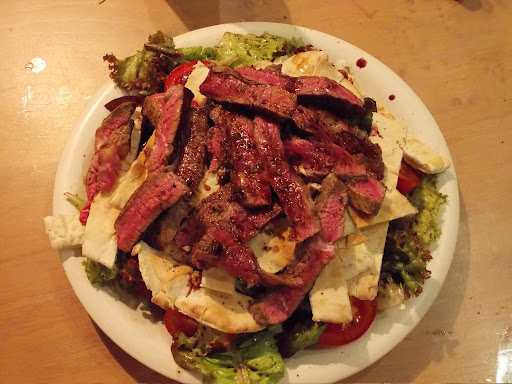
Hot beef salad and sumac
For one
A good handful of mixed salad leaves from the veg plot washed clean of slugs, bugs and soil. A couple of quartered tomatoes, some peeled diced cucumber and one of the long thin green peppers they sell in the International Store, sliced.
Dry the salad and put in a large dry bowl. Sprinkle over a teaspoon of sumac and mix well. Add the rest of the salad ingredients.
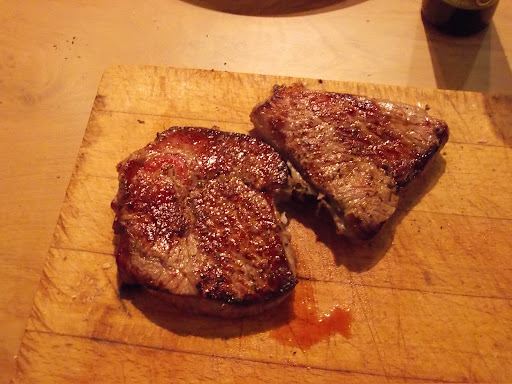
Heat up a cast iron until hot, let it get even hotter and throw in a thin layer of oil. Add the steak – I used a piece of aged rump. Add a good grinding of black pepper and a pinch of sea salt. Cook on the high heat for a few minutes then turn over. When it is done as you like it take the steak out of the pan to rest.
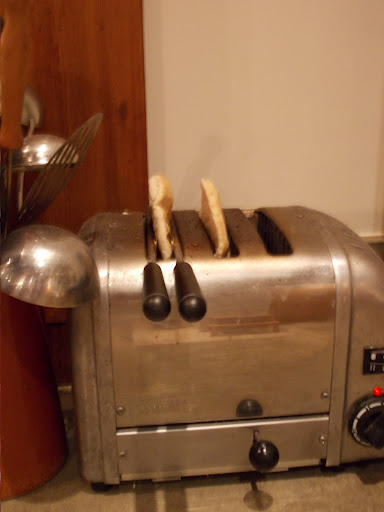
Whilst it is doing that crisp up some pitta bread in a toaster. Make up a quick dressing with oil and thick balsamic vinegar and mix that through the salad. Pile on a plate.
Slice up the pitta and place over the salad. Cut the steak into good chunks and lay it generously over the pitta. Nab a swirl of red wine in the pan to pick up the last of the heat and the bits of flavour that are left and pour that over the steak. Sprinkle some more sumac on top and eat with the rest of the good red wine.
Reflections on good cheese
Someone asked me today if these are all my own posts – even the one about being on a boat in the middle of Dunmannus Bay. I explained that they were but I understood the question. There is I suspect a variance in tone and subject – interjections of music, the food I might be cooking over an evening and reflections on cheese and time spent at the Cottage. Sadly those are things I would rather be thinking about in the middle of the night when the shortcomings of the day come stealing up to keep me awake.
So reflections on cheese.
I got excited on Monday when I found on the shelves of an Oxfam shop two goods books about cheese. The first was a Dorling Kindersley book on French Cheeses by the French sounding Kazuko Masui and Tomoko Yamada. I suspect it is not the definitive book on French cheese and you would look a bit of a dork clutching it around the food stalls of a French country market but it covers at least 200 different types of cheese and there is a good colour photograph of each of them, there is along list of contributors at the back from France and as an introduction into what is there (and a bit of loo reading) it works well.
The second book was The Great British Cheese Book by Patrick Rance. A substantially more serious proposition and one that is going to take longer to get to grips with. There are no photographs and the only pictures are hand drawn maps to show the locations of the producers and drawings of the country where some of the cheeses are made, the cows that produce the milk and the equipment used in the process. I put Patrick Rance into Google and quickly came up with this obituary from the Independent in 1999:-
http://www.independent.co.uk/arts-entertainment/obituary-major-patrick-rance-1118828.html
I had unknowingly managed to find a book by the father of modern British cheese. I have not yet got past the opening few pages and his start on the sad diminishing and slow revival of Cheddar cheese and have in the meantime been waylaid by the other book that I bought that day being a PSmith novel by P G Wodehouse – another character wearing a monocle. But in the meantime I thought it worth sharing a couple of short extracts from the Preface.
If human perfection truly springs from the happy coincidence of duty with pleasure, then good cheese can make momentary paragons of us all. Cheese is economical and healthy in its concentration of rich natural nourishment, and has the quality, unique amongst palatable foodstuffs, of actually protecting the teeth. By playing endless variations on the theme of texture, flavour and aroma it also has the versatility to cater for almost every palate. These virtues, combined in no other single form of food, make the eating of cheese a dietetic duty of incomparable delight.
From the 1930s, I can recall a pub garden of Rupert Brooke’s Grantchester and my first pint of hoppy beer, set off to perfection by a tangy descendant of my childhood Cheddar. I relished it then as I have relished it ever since.
The book is more than twenty years old and I have no doubt that large parts of it will be out of date and I suspect that if he was doing it now the long list of useful addresses at the end would be shorter. But flicking through it I can pick out the same tensions between the desire for an older, better product and world’s desire for something more convenient, easier and cheaper. A conversation that can be had with anyone trying to produce good honest food today.
The book has hardly been opened and smells of good tobacco. Reading the obituary I remembered that I had lunch a few times many years ago in the Wells Stores in Abingdon with Diane Bowdler and I never really knew it was there.
Listening to a compilation called Country Funk.
Rice and Chicken in an Orange Sauce
Another evening in and a chance to try out for myself a recipe for Orange Stew and Chicken from a book on Persian Food I picked up in Waterstones earlier this year by Margaret Shaida. Persia is of course now part of Iran and I was tempted into buying the book after speaking to Kerem from the grocers on Oxton Road on the different ways they have for cooking rice.
He explained that is was important to soak the rice before cooking it, to cook it briefly in boiling water and then to rinse it in warm water before it goes back into the pan to steam. It is this last part of the process that is crucial in terms of the texture of the rice and the possibilities for adding crunch. Melt a good slab of butter in the bottom of the pan before putting the rice back and then put it on the lowest possible heat with the lid of the pan covered in a tea towel to absorb the steam. It should be possible to leave it to cook like this for almost an hour with the rice developing a crust on the bottom of the pan. For variation you can put some egg with the butter or a layer of thinly sliced potato.
As I leaved through the book I found a section on the cooking of rice that seemed to replicate almost exactly the process as described to me by Kerem. Having bought the book I went through a few more books from the shelves in the kitchen and found that Claudia Roden on Middle Eastern Food and Arto de Haroutunian on Middle Eastern Cookerey both contain similar descriptions on the process. It appears again, albeit in more sophisticated form in the Moro cookbooks andCrazy Water Pickled Lemons by Diane Henry. I won’t go through the technique in detail here but will say that although the cooking of rice likes this can appear labour intensive once you have done it a few times, and have got used to the steps to be taken it is almost as simple as boiling up a panful of pasta. It just needs time and care to make sure that the tea towel you wrap the lid of the pan in does not catch fire on the hob.
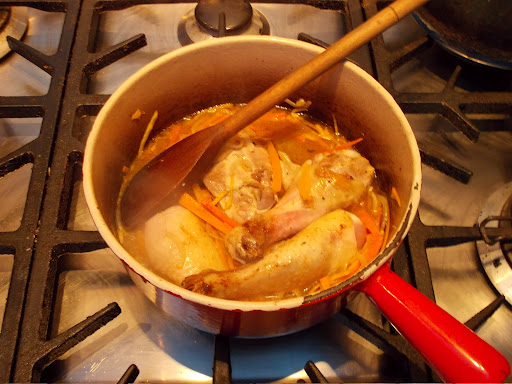
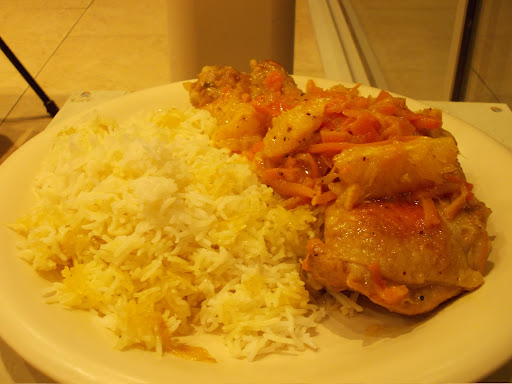
Having bought the book I spotted a recipe for chicken with orange sauce. It is of course the wrong time of year for Seville oranges but the recipe suggested that the bitterness could be replicated by the juice of a lemon. Apart from the orange the only flavouring was cinnamon, salt, pepper and a carrot choped into matchsticks and cook down with an onion. There was a small frustration as I was cooking the rice and found there was no butter in the fridge but a thin layer of olive oil worked almost as well and developed a slightly lighter crust. For someone who is not a great fan of marmalade is was delicious.