A post from last summer…
View original post 2,025 more words
A post from last summer…
View original post 2,025 more words
Saturday lunch time and its it lamb chops again. I bought them in the international Store and despite the wind and grey skies the barbeque is lit to cook them on.
I was asked to wait a few minutes before I bought them. There was a man standing in front of me and he appeared to have bought most of the rest of the sheep.
The carcass lay on the stainless steel work bench. The butcher pared away fat from the legs and the shoulder and then with a long sharp cleaver he quartered it.
In the corner there was an electric saw. The blade ran vertical and there was a high pitched whine he he started it up the blade shaking up and down. He took the pieces of the animal and with quick dextrous fingers ran them through the blade, turning the pieces again and again until the bone and meat was cut down to the right side. As he was done the pieces were pushed into a cardboard box.
When he was finished and the lamb had been all cut up he emptied the cardboard box into four white plastic bags, tying the up the tops and double bagging them all. He printed the price ticket and stuck it to one of the bags.
The man in front of me went round the counter to pick the bags and took them to the front to pay.
The butcher then put my chops through the blade.
The chops have been marinaded in garlic, olive oil and crushed cumin seeds. I have a yogurt, green chilli and coriander dip to go with them.
I will have them with a bottle of Cain’s lager I found by itself on the supermarket shelf. It could be the last bottle I have.
Miriam’s housekeeper/cook was a second cousin of the O’Mahonys from Kilcrohane and her name was Carmel O’Mahony. She was a couple of years younger than Miriam although it was always assumed that she was the older of the two. From the beginning Miriam called her Mrs O’Mahony.
She moved into the Butter House a year or so after Miriam took up residence in the Cottage. No-one was quite sure as to exactley how the arrangement was made. There was talk of how Miriam forgot how to eat when she moved into the Cottage and the weight that she lost and back in Bantry her family were concerned enough to speak to someone so that a young single woman could be on hand to help and to cook.
Carmel O’Mahony was a short stocky woman with a tight shock of black hair. She was twenty three when she started and she took to the task. She was given a car to make the trip to Bantry for food although just as often she would walk the five miles to Durrus and back especially in summer walking the length of the old road that ran in a straight line a few hundred yards back from the sea.
After a while she came to a rhythm with the job and she was made easy by what she was doing. She limited the trips to Bantry to just once a week in the car. She would come back with bags of food and a block of ice that was kept in a hole in the ground at the back of the Butter House. In between times there were two or three trips to Durrus. She acquired a heavy black bike and she took to using that if she did not have time to walk.
Sometimes Miriam would accompany her on the trips to Bantry and she would go visit her family and they always went to together on the first Friday of the month for the market in Wolfe Tone Square. At first Carmel was unsure on how she should call Miriam and for years she got by with not calling her anything at all. She developed a tone for her voice which drew Miriam’s attention to what she was saying and Miriam would answer or react without noticing the lack of a name. But many years into their time together and when they were alone in the Cottage or Butter House Carmel would call Miriam Minnie and Miriam would call her Carmel.
At home Carmel had learned how to make bread, cook potatoes and fry mackerel in butter. She was anxious to expand her range and so during the summer months she would spend time in the large kitchen of Ahakista House watching the cooks who were brought over from London and picking up how they went about it. It was rare for the same cook to come over with the family their two years running but Carmel became friends with them all and over two or three years she had learned enough .
There was an old Radiation Gas Oven in the Butter House and that came with its own cook book. With the benefit of that and what she picked up in the kitchen in Ahakista House Carmel became a good cook.
She was busiest during the summer when there were guests in the Cottage and she had to hurry through time to make sure they were properly fed. Her rhythm was disrupted during those months and there were more trips to the butchers in Bantry.
Her triumph was a fruit de mer that she created with food from the bay. The visitors that summer had been to Paris and there was much talk of the food that they had eaten there and the great plates of ice laden with sea food. Carmel’s brothers were fishermen and she knew what they took from the bay.
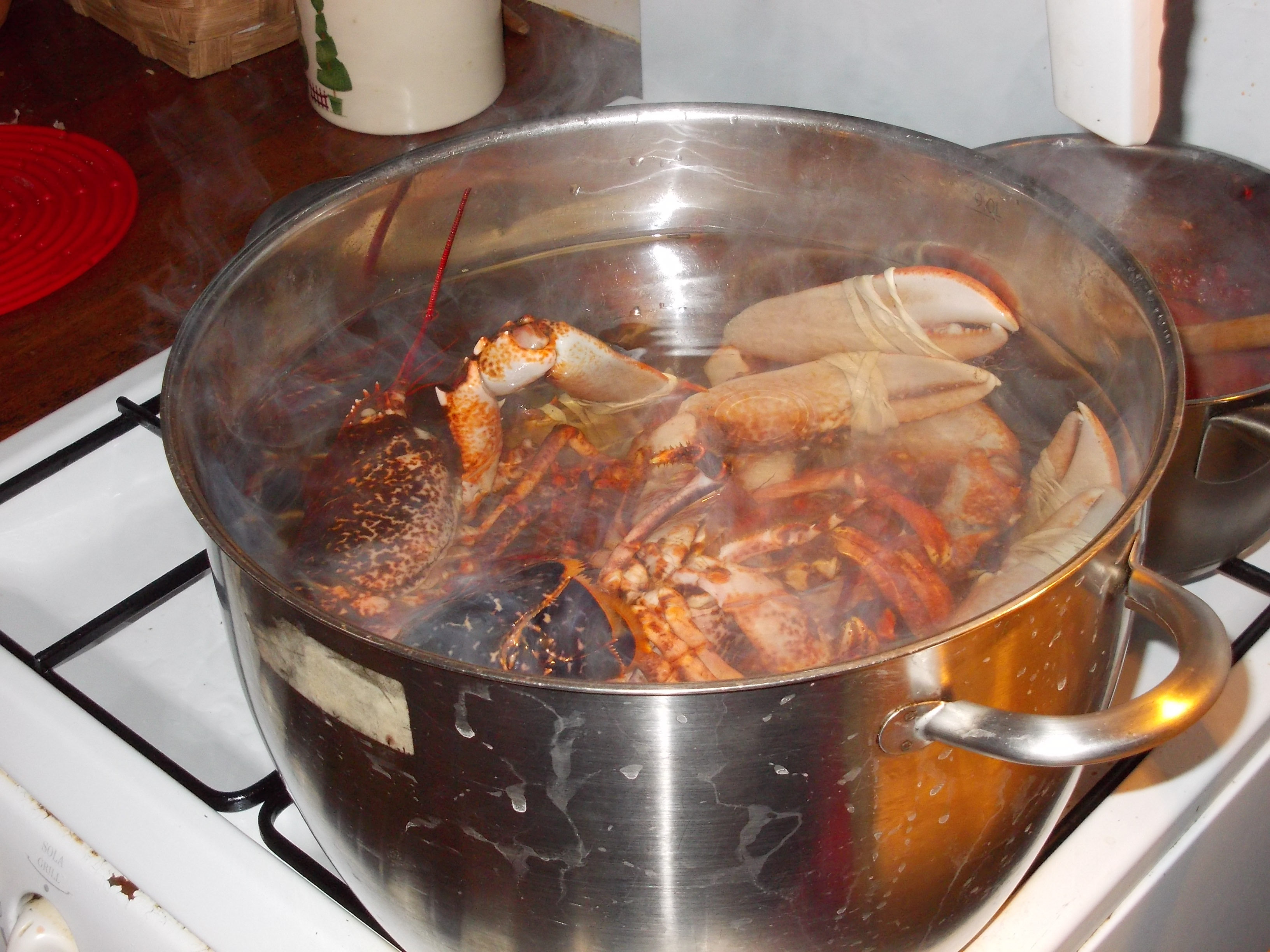
That week she brought two blokes of ice back from Bantry. Her brothers delivered a straw basket of lobsters and crab. The lobsters were a deep dark blue and they were bright and alive so fresh were they out of the bay. She cooked them in a steel pan of boiling sea water and split them open and cracked their claws. She had her own pot for prawns and she pulled that in and picked up a pan full of winkles from the pools by the beach.
Once it was all cooked she kept it cool on the one block of ice then chipped away at the other with a hammer and chisel. The broken shards of ice were then piled onto a large blue china plate and the crab, lobsters, prawns and winkles were placed on top. She decorated the whole with pale wisps of seaweed.
The vast plate was then carried across the road and presented to Miriam and her three guests who were sat round the round metal table in the garden. Carmel was applauded by the guests as the plate was put down and she went back to bring over bread and fresh butter.
One way or other Miriam Black-Fore owned and lived in the Cottage for 43 years before she sold it in 1978 to Lenny and his wife. She was responsible for the creation of the lawn that runs down to the stone beach and the sea. Before that the Cottage stood on its scrub of rough rock raised up slightly above the pier. There times when with a high tide and a wind coming in from the east the water would be pushed up high enough so that it almost reached the split yellow door.
A low wall was built up from the beach and rocks and stones were crushed and filled in the space behind to form a smooth surface up to the Cottage and it was then filled it with good top soil brought down from the hills. They were able to pack it deep enough on the western boundary to the sea so that a few rough trees could be planted and fix down their roots. Grass was laid out over the soil and to everyone’s surprise it took quickly and formed a thick green apron from the Cottage down to the sea.
There was a wall running against the run of the road and a thick fuchsia hedge was planted so as to allow the lawn some privacy. Once that had grown the only way to get a view of the back of the Cottage was from out over the water.
The work was done by men that Miriam brought over from the family’s big house in Bantry. She oversaw their labours giving directions from the door of the Cottage in a pair of rough blue trousers.
When it was done and the grass had settled she bought a small round metal table and two metal charirs. These were placed on the grass outside the yellow door and she could sit there watching the water with half an eye on the iron gate and the world has it passed slowly on the road.
Before Miriam lived there the Cottage was down in the books as a farm but no-one was quite sure what was grown there or if there any animals apart from a few chickens and a cow in the field opposite. Being so close to the sea and on the back of the pier there was an assumption that there must be some connection with their activities but the books were clear, the place was a farm and only farmers lived there. Some of the ground in the field opposite was good and maybe there was enough there to grow a crop of potatoes.
There was no heating in the Cottage apart from the open fire but the walls were, and still are, eighteen inches almost two feet thick and they kept the heat in during winter and cooled the place down in the sun. But the place was full of damp and she would take herself away to friends in London for two months at the start of the year to give herself a chance to clear her lungs.
Her friends in London were arty types that she had met and kept in contact with after University. They were artists and poets, writer and dreamers. They in turn would come stay in the summer arriving in a smart car driven up from Cork. If they were bored they would stay for months at a time filling the Cottage with their talk and laughter. Miriam’s cook and housekeeper lived in the Butter House across the road and the food would be driven in from Bantry, cooked and carried across the road to the Cottage no matter the weather.
For an evening they would sometimes walk up to Arundel’s Pub where they would drink pints with the men, the farmers and fishermen, and the talk would go on deep into the night.
But the friends from London would eventually go and Miriam would have the Cottage back to herself and her housekeeper across the road. Over the years the visitors from London declined and Miriam would spend long days sat in her metal chair by the small round table. She would wrap herself in rugs and blankets and quietly watch the sea and the sky. If you had asked her she would say it was better than any church or cathedral. She kept herself still and the air was sepulchral around her.
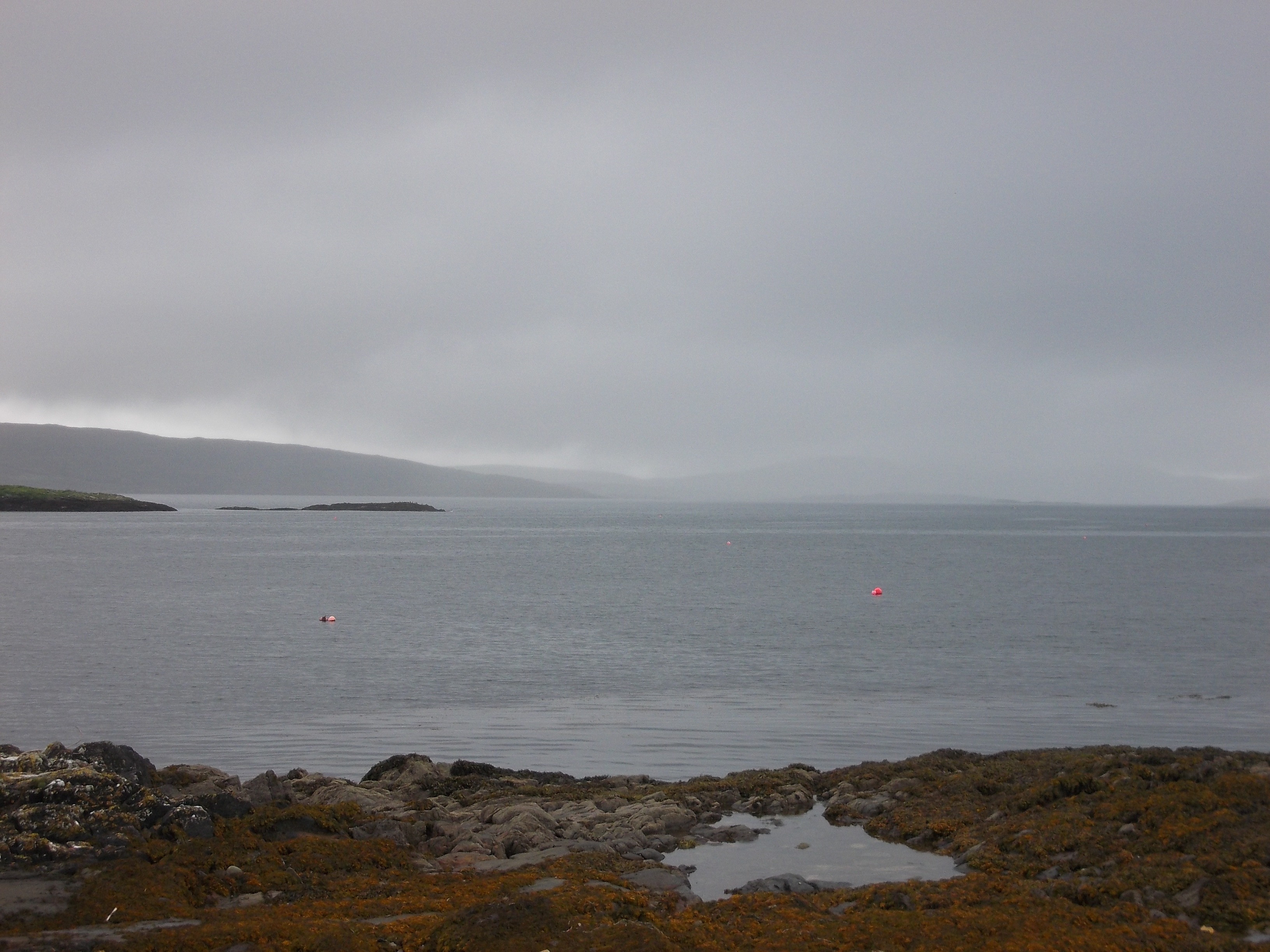
The silence was empty and then filled again, the layers of grey cloud rubbing at the landscape until all that was left was a white wall of air as if the bleached wall of some ancient church had come down and enveloped the bay.
A blog of my year in Punta Gorda, Honduras with Project Trust
an excuse to moan
A unique quarterly Irish food magazine which celebrates seasonal eating.
The greatest WordPress.com site in all the land!
A community bakery for Anfield
How to kill a mackerel and other stories...
History of Durrus/Muintervara
Saying "food is just fuel" is like saying "sex is just for reproduction", you miss out on a whole heap of fun
All kinds of everything to do with writing WordPress.com site