Just about half way across The Irish Sea

Well we are on the way but so far it has been an unsettling journey. Work was busy and I was conscious that I was leaving things behind. at least the desk was cleared and I managed to clear off most of the outstanding emails before they started to mount up again.

Then it was home and the rush to finish packing and the annual squeeze of everything into the car, making use for one of the few times a year, of all the space that a Volvo Estate has to offer. We left on time and despite the promises otherwise the traffic was not too bad until we were brought to a halt outside Bangor. There was no obvious reason why apart from the apparent need to give some grass cutters a break.

After twenty minutes we were on our way again. Pulling up to the ferry terminal I was asked why the illuminated signs all said ‘Next ferry 20.30’ and i had been reassuring every one we did need to be there until five to nine.

The explanation came quickly when i handed our ticket in and was told that our ferry had left 12 hours earlier that morning. I explained to the lady in the kiosk and she nodded her head in agreement as she wrote us out a new ticket. She then explained that all places in the Stenna Plus Lounge had gone but that was alright wasn’t it. The family howled in anguish behind me. there would be no comfy seats on the crossing.

On the ship we shifted seats trying to find somewhere we could sit together that wasn’t next to the cafe, a loo or a passageway and from where we could avoid having to watch/listen an endless run through of Madagascar III. We failed.

The good news is that I have left behind the USB lead for my camera so there will be limited opportunities for sharing pictures of bloodied fish. Hopefully some of will be disappointed at that news.

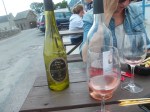
We are now halfway across the Irish Sea. I have eaten soggy chips and dried chicken. I am going take a swig of wine and try go to sleep listening to Lone Pigeon and the lady next door to us complaining again as the house of cards she is making collapses again. Looking forward to the four hour drive that starts at midnight. i do have the new Grant Hart CD to listen to though which I was able to pick up today although it does not come out proper until Monday!

Counting down hours to Ahakista

In forty eight hours we will be on a boat half way across the Irish Sea girding ourselves for the over night drive across Ireland to Cork and hoping that we make it out of Dublin without getting lost.

As far as I can tell no one has started to pack. It feels strange to be going so early in the summer. Over the last few years we have left it until the last two weeks of August. If the weather stays as it is we will have got it right.

We are going to have a busy time of it this years with friends, relatives and other visitors all crossing over and some of the activities are starting to mount up. It seems we have been booked into the quiz night in Arundel’s that is due to be hosted by the famous neighbour. That could be an interesting evening and who knows edited highlights may appear here in a few weeks time.

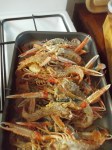
The activity won’t matter too much so long as there is time for lobsters, time for a couple of hours by myself in the bay, orange lines wrapped around my ankles bloodying myself hauling mackerel out of the water and time on a hill in the wind with Bantry Bay to my right, Dunmanus to my left and the vast waste of the Atlantic in front of me – time gone in the air and the water. Maybe some time too nursing a pint at a bar and thinking on talk with a man with a black beard. Time to stand still for a while and take it all in.

Lying with sheep

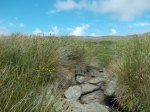
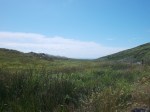
Jones, the man who washed up on the Sheep’s Head having floated across the bay from the wreck of The Bohemian, took to living in one of the abandoned cottages in Gortavellig. The cottages had been built by the miners who briefly worked the hill there to try and get out its copper. The copper was difficult to reach or not there and so the miners left after a couple of years. Their cottages perched on the top of a cliff looking out over the bulk of  Bantry Bay. It is a rough empty exposed spot and only a man who had spent too many years afloat would want to fetch up there.

The cottages had only been empty a few years when Jones found them. They still had their roofs and strips of sacking hung on nails over the spaces for windows and a door. The floor was only the bare earth and Jones pulled up armfuls of bracken and laid it down in thick heaps to sleep on.

For water the miners had built a dam across one the streams that ran down from the hill and a small pool had been created. But the water was always brackish from the spray that blew up from the sea at the bottom of the cliffs. But it was good enough to live on. Jones cleared the ground outside the cottages and made space to grow potatoes and greens.

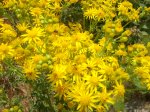
In the summer water lillies would bloom in the pool the bright yellow looking out of place against the grey and the brown of the hills and the water.

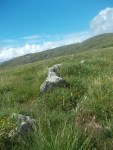
He bought his goats and then he bought three sheep. The animals ran wild through the hills over the summer and he would follow them up there tramping over the land alone with the clear air and all that he could see. There were nights that he spent up there, curling down to sleep in a flat hollow in the grass, bracken and heather where a sheep had lain in the day. The warmth would still be there and if it was cold he could call to the sheep to lie back down in the spot their rough coats an extra blanket against the night.

Birds

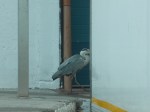
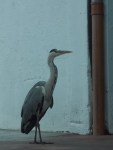
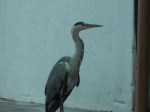
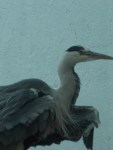
The lazy, leathery flap of a heron’s terodactyl wings, gathering its awkward legs back under itself as it rises, disturbed, from the waters edge, landing again, feet first, a hundred yards or so along the shore, unfolding its same dark silhouette, the daggers edge of its beak clear and sharp against the water.

Two hering gulls mob a heron around the trees at the back of the orchard over The Butter House. The birds wheel and whirl over the branches, the heron showing surprising urgency for its size, letting out a throaty Kwaww as it manages to twist away from its pursuers who had been trying to force it to vomit back up the small fish or frog that it had just caught down amongst the weeds.

Two or three cormorants cruising, their bodies low and the elegant S bend of their neck and head just breaking the surface. When disturbed tupping themselves up, a slight pop, their webbed feet briefly pattering the air. Wait a minute or two and they bob back and continue cruising the same stretch. You might see them beating an urgent path back to Owen Island an overlarge fish still shaking in the tight clasp of the beak.

Looking out over the bay the only colour I can see is silver, cut up at low tide by the black rocks of weed slowly revealing themselves where the sun casts its light on the water, a moving shining glow, tapering to grey for the clouds and a clear blue where the water is clear and the sky is empty. Then as the dark rain clouds gather the light moves away from the water and the blues shift to grey.

As the tide goes down gulls and the odd oystercatcher gather at the place over which the waters of Ahakista Stream flow into the sea. Some of the gulls ruffle their feathers in the running water as if welcoming the opportunity to have the fresh water flowing through rather than the salt, others pick at the titbits of food washed down from the hills.

Gannets – something in the quality of their whiteness that means they can be spotted across such great distances – half a mile away soaring across the middle of the bay – they can be seen a quick white spot caught in the corner of my eye before rising up and then down for the white splash into the sea. A thin veil of mist flows down the middle of the bay, elsewhere there is some blue sky allowing the sun to come through and its light catches six or so of the birds circling and waiting.

In Beowulf’s time the sea was called the Gannet’s bath such was the enthusiasm they dropped into the water. Their presence in the bay usually means that shoals of mackerel are coursing through the waters. As the days draw in and night steals more time over the waters they will follow the shoals out to the deep waters.
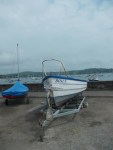
In August 2007 we had some of the best fishing ever. The engine on Montbretia was not working so it was all done in the grey inflatable, Jolly Roger, motored out beyond Owen Island and allowed to drift in the wind. Every time we went out fish were caught. This was the year Harry and Anna came to stay and they both caught four mackerel on the same line. Anna’s line became so tangled we could not undo the knots out in the water and had to come in to untangle the mess of orange string. I can’t remember seeing as many gannets as we saw that year. Normally you only see them when out in the bay and then it is a solitary bird in the distance. But this year I could see them from the garden. At any one time there were five or six of them off Owen Island, cutting through the sky, watching them, one would break off and wings back make the dive into the sea. When the wind was down it was possible to hear the faint thump as they hit the water with a splash of white. A few days later there was a group of terns diving into the water inside of Owen Island. They were smaller and did not rise so high in the sky but it was still possible to hear the wet clump as they hit the water.

The different way a herring gull holds its head as it calls in flight. The less raucous KAW which is more drawn out the head held steady and then the KAW KAW KAW of alarm and complaint, the head is pulled back as the yellow beak hawks out its cry.

Swallows on the water in midsummer chasing midges in a twirl of bending black shadow.

Hooded crows, almost identical to carrion crows from the UK – the main difference being the grey cloak over their shoulders. In the early morning they gather in groups of a dozen or more on the roads in the small towns we drive through on the way home after the holiday shifting nonchalantly as we swing pass.

Swans – the couple who swim across kitchen cove and between here and Durrus at least two other pairs. The first swimming in a line of ten fully grown swans. The second couple followed by half a dozen grey cygnets.

If the sun is crowded by clouds the water is made to shine ever more brightly against the diminishing light.

The garden faces south onto the sea so that most of what we see against the water is in silhouette above the rocks with only the odd flash of colour that might come from the orange of an oyster catcher’s beak as it picks at the waters edge.

Then there is skittish flock of half a dozen turnstones rising suddenly from behind the rock where they had been hiding, choosing, at the last moment to depart.