The Jack Tobin Cup

Using smoked mackerel to make a kedgeree had a certain logic to it. We had lots of mackerel, a smoker, a bag of basmati rice and three hungry teenagers and an eleven year old who were all enthusiastic when it was suggested.
The mackerel were caught over the course of one of those August afternoons when the sun finally beat back the clouds and the sky was blue and light, clear and impossible, settled over the bay. It was the afternoon of the fishing competition, the Jack Tobin Cup, put off from the weekend of the festival in respect for Jack the old man who would come down to look over the pier, leaning arms against the stone wall, watching whatever was going on and his boat with the fluttering skull and crossbones pendant.
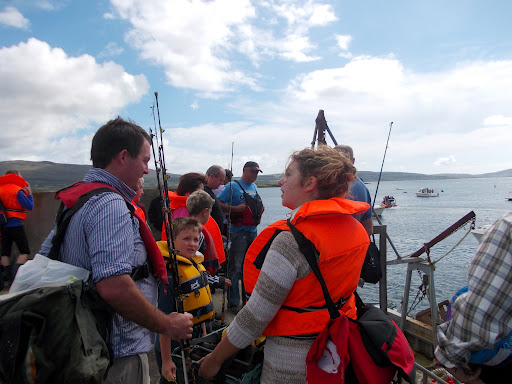
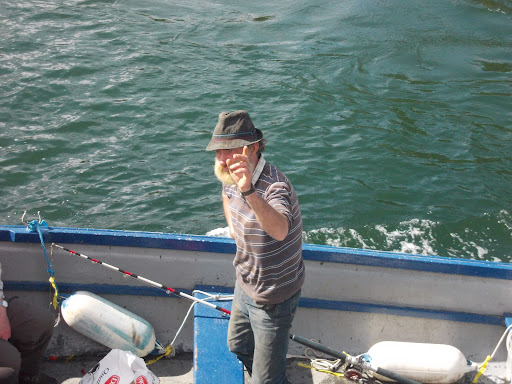
We had lunch on the beach sausages cooked on the fire and then went to the pier to watch the competitors go off.  Cars crowded around the Butter House, smart Land Rovers and Mercedes disgorging eager anglers togged up in bright gear holding expensive rods, and battered indeterminate vehicles held together with gaffer tape down from the hills and brown round the edges out of which climbed old men in green and grey clutching their mackerel lines.


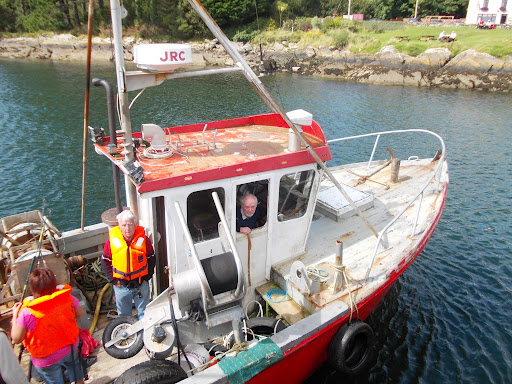
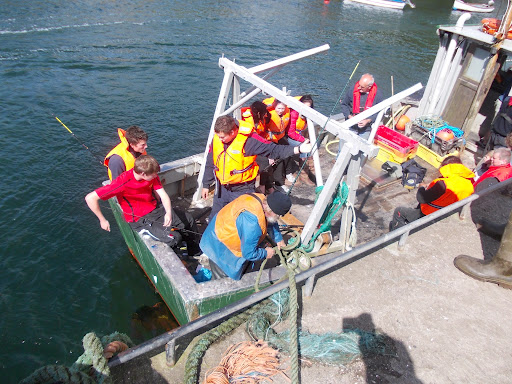
Boats started to pull into the cove and up against the pier. There was a man with a loudhailer taking a note of who was on each boat and making sure that everybody was wearing a life jacket although the old men from the hills did not seem to need them.  People clambered onto the boats clutching their lines and sometime after the due start time of three o’clock the boats streamed out into the bay and the sun with the man on the loudhailer reminding them they needed to be back by six.


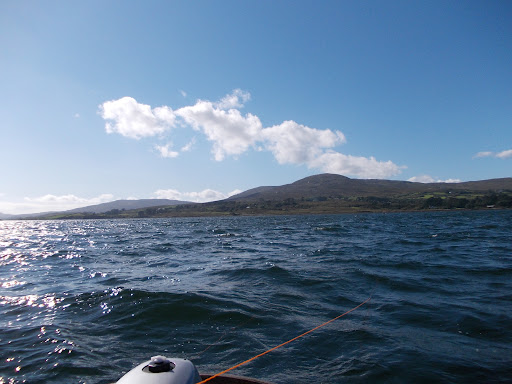
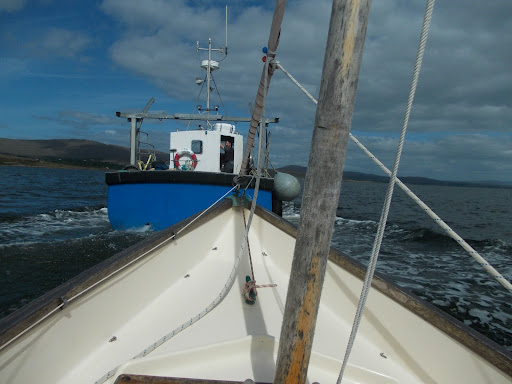
We followed sheepishly twenty minutes later with a detour back to shore to get the petrol tank for Montbretia. Out in the bay the boats of the competition fleet had taken up favored positions without there being any great consistency. We could again see gannets circling the air and we motored out until we were under them and they were plummeting down and hitting the water twenty yards off the bow of the boat, so close we could see the scoops of water drifting from their beaks as they rose back into the air.
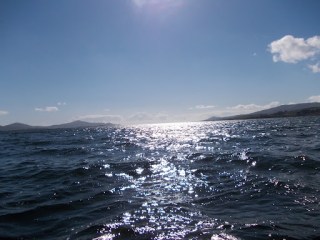

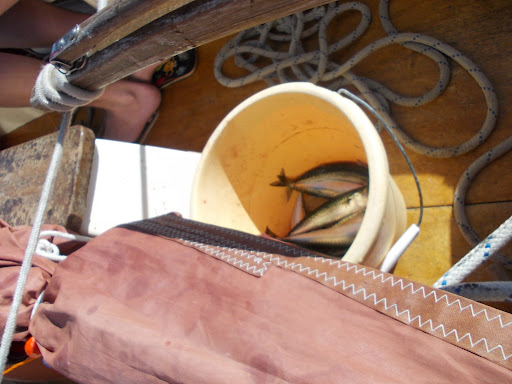
Two lines were quickly dropped off the back and there was a quiet ten minutes as we pulled them and released them back into the water during which time the gannets had moved on. Then one the kids called out “I’ve got one!”.  I tugged at the line and felt the familiar pull as the fish at the end of it struggled to get back to its place in the shoal.  We pulled the line in and soon there were fish spilling into the bottom of the boat. Ten minutes later all was quiet again and there were ten or so fish in the bucket. Looking out over the back of the boat some of us saw the brief black flash of a fin out of the water and that was it for our view of a porpoise.


We moved back closer to the shore and Owen Island where the gannets had gathered again. A few minutes after the lines were in and we were pulling them out again another rush of fish in the boat. By this time we had been out for an hour so and some of the competition fleet was starting to head back all pausing for their favoured spot off the point from Owen Island. We followed them and caught another line full of mackerel. Over the hour and a bit we had been out we must have caught forty dish altogether, a lot of them were too small to be worth keeping but there still at least twenty in the bottom of the bucket. We decided to come back in so as to avoid the rush of the returning competitors.


Having left the bucket of fish somewhere cool we went back to the pier to watch them come in. The boats were bunched at the pier, people clambering over the sides, buckets and trays of fish being lifted up. Some of the boats, those that had not done so well, held back. C186, the green fishing boat from the pier, with more than ten lines on it had only caught nine fish.


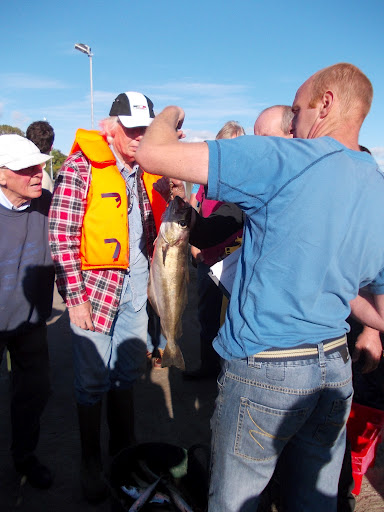
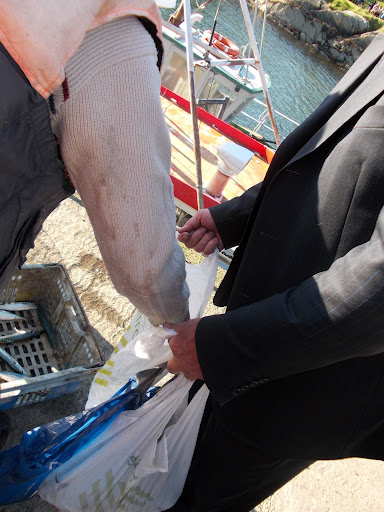
There was a quick counting of fish over the concrete of the pier, 255 for one boat more than 300 for another. The large Pollock were put to one side and a set of scales produced and the biggest weighed. Once the counting had stop people crowded round the crates of mackerel all clutching well used plastic bags and hands slick with shit, blood and scales shoveled the fish into any open bag that was put near.


No sooner was a bag full and it was taken down to the water so the fish could be filleted. The sharp flash of knives being passed around heads bent to the task and the gulls flitting as close as they could to pick at the scraps.

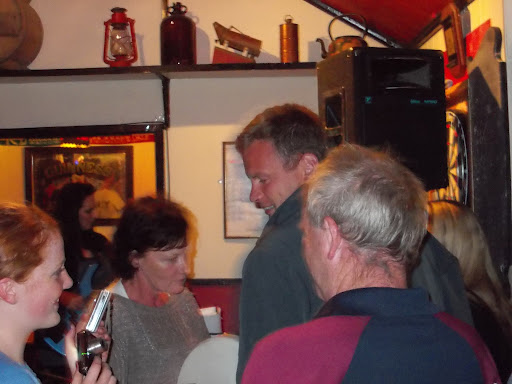
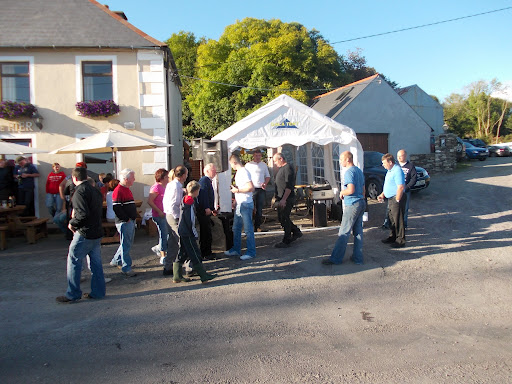
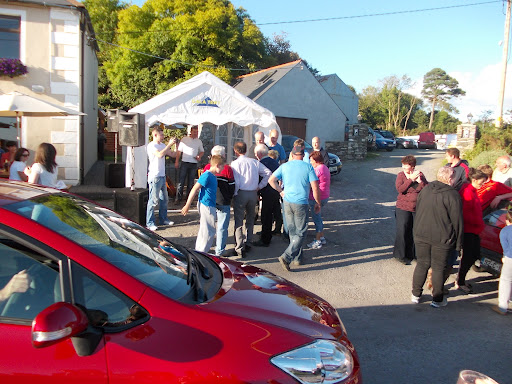
Back at Arundels the small marquee had been moved down close the road and a band started to play in the sun. The crowd moved up from the pier to the pub and an orderly scrum gathered round the bar to get in the pints before the prize giving. Getting a round in the glasses and bottles were handed back through the crowd for the rest of the family.
Outside the band was playing Proud Mary and the people spilled across the road. Passing cars were forced to slow down or come to a stop and bemused started faces looked out as the prize giving started.

As each winner was announced everyone on the boat had to come out before the prize could be hand over and the photographer from The Southern Star took his photo. Willhem won the competition with his boat catching more than 300 fish. He took the cup back into the bar and filled it with whiskey and lemonade and after that each man who walked through the door was obliged to take a mouthful including the irritable gentleman with a beard who was trying to find the owner of the Fiat that was blocking in his car.


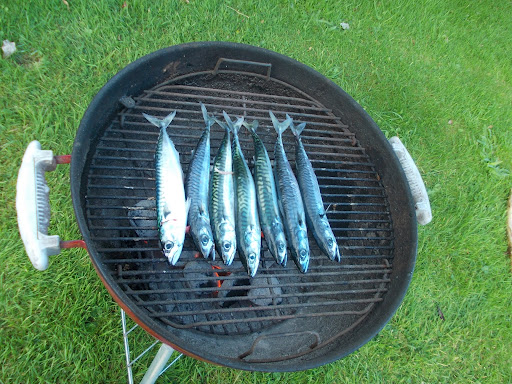
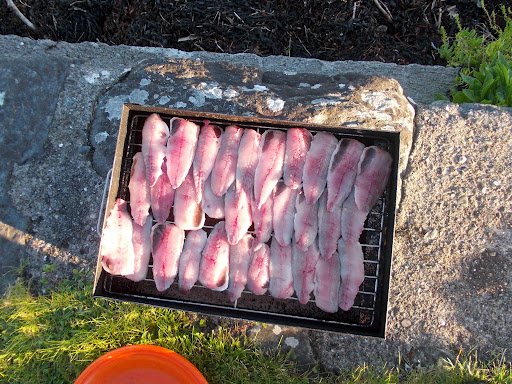
Once the prizes had been handed out we drifted back to the Cottage and I filleted the mackerel on the stones at the end of the lawn, set up the smoker and twenty minutes later the fish were smoked. Once they were done I peeled away the skin my fingers slippy with the oil from the fish.


Back in the kitchen I fried off and onion and some garlic in the new pan I had bought from The Good Things Café, whilst cooking a bag of rice. I was able to find some curry powder in the cupboard and stirred in a tablespoon of this into the onion and then stirred in the cooked rice. The pan was full and the rice and onions had to be turned carefully. I added most of the mackerel and stirred this in as well the fillets breaking down as they were turned in the rice. When we were almost ready to eat I laid the remaining fillets over the rice and decorated the dish with quartered hard boiled eggs, sliced lemon and parsley.


We ate it all by the fire on the beach a half moon silvering the water and the noise from the pub a gentle murmur behind us over the bay.


Walking to Bantry Market

Fifty years I ago I don’t think it would have been unusual to have walked to Bantry Market on a Friday. I didn’t quite walk the whole way from Ahakista but I did walk it from Durrus. Leo had to be picked up the airport at 10.30 and that needed the car which meant that we might have to give the market a miss that week. So I suggested that I could be dropped off in Durrus and I would walk to the market and there would be sufficient time for me to get there and get in the shopping and to be picked up by the car as it came back.
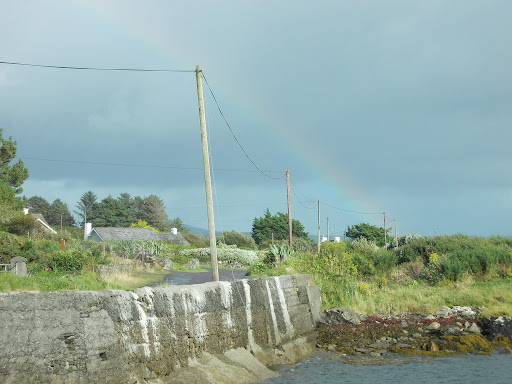
So I was dropped off around 9.00am by the bridge behind St James’ Church to start on the walk up the hill to Coomkeen. The rain was a constant persistent drizzle soaking into the pockets of my coat and down the back of my neck. Despite the grey rain and the wind I soon felt hot as the road started up on the gentle incline to the top of the hill.


The ditches on either side of the road were flush with water and the sound of it percolated the air. The only other sound was the birds in the hedges on either side, the angry disturbed song of the blackbird surprised off its perch, the twittering of wrens and gold crests.
The walking was for the most part easygoing and not too steep. I soon past over the line where there were green fields on either side and the ground turned rough and peaty occasionally breaking into a small oasis of green and trees where a turn in the road created a kink that allowed warmth and sufficient soil to gather so that more would grow other than heather and gorse.


The sides of the road were alive with montbretia and it spilt over the tarmac its bright orange flowers bright and clear amidst the drizzle


Two third of the way up I was distracted by signs for Durrus Cheese and failed to look at the map. It turns out that the farmhouse where they make the cheese is at the end of a cul de sac and I had to turn about and retrace my steps for quarter of a mile to get back to the main road.
Only one car passed me on the way up. The driver slowed down as I stood back to allow him to pass, rolled down his window and asked if I was okay. I reassured him that all was fine and that I did not in the least mind getting wet and that I was on my way to Bantry. He offered me a lift but having determined to walk I thanked him and said no.
At one point I was surprised by a sheep in the hedge. It was almost as frightened as I was by the noise that it made to get away from me and back into its field. Further on a ram with black horns blocked the road.  Only a few days before I had been told a story of a walker who found himself being charged down by a ram when he got between him and his ewes. This one paused for a few moments then ambled back off the track.


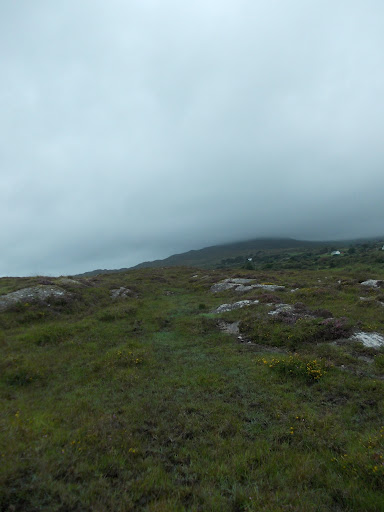
At the top the world was covered in grey. I have been there before and you can see the whole sweep of Bantry and Dunmannus Bays laid out in front on either side of the spine of the Sheep’s Head, but today they were all covered in cloud pressing down on the ground. There was no sound of water as it had nowhere to run down and all I could hear was the wind and air coming in off the sea.
The walk down was easier and should have been a gentle amble into Bantry. Part way down I came across six guilty looking bullocks that appeared to have just escaped from their field. They eyed me balefully as I approached and then as one turned to scramble around the loose gate they had just come from like so many school boys caught out of bounds.


At the bottom there was a choice of routes towards Bantry. The first took you on a road close the sea; the second was across country and took in a Holy Well and Mass Stone. I took the second option not knowing when I might be that way again.


I met the only person I would come across on the walk. I could see on the road ahead a horse standing quietly next to a tumbled down stone shed. As I got closer I could see the horse was tied to a cart on which there appeared to be a rusted gate. An old man come from behind the shed and put an ancient fork on to the cart. We both said good morning and I think that was the last we understood of each other. He must have been in his seventies, with a well-creased weather beaten face and very few teeth and eyes that were ringed with red. His words came in a confused jumble of sound as I told him I was on my way to Bantry having walked from Durrus. I think he said I had about two miles to go as he pointed over a nearby field. He probably thought I was mad. We wished each other good day.
The signs for the Sheep’s Head took me over the field he had pointed over.  The rain had turned the grass to thick mud, which, unless I was careful, came up over my boots. To avoid the mud I had to walk through tall sedge that soaked through my trousers. Some while back I had passed a Beware of the Bull sign and I eyed the fresh droppings and the hooves that obviously been churning the mud warily.


The Mass Stone was behind a newly painted grey gate and down a slippery steep staircase. As my feet skidded on the wet stones and visions of myself falling and cracking my head and being rescued by the farmer with no teeth.


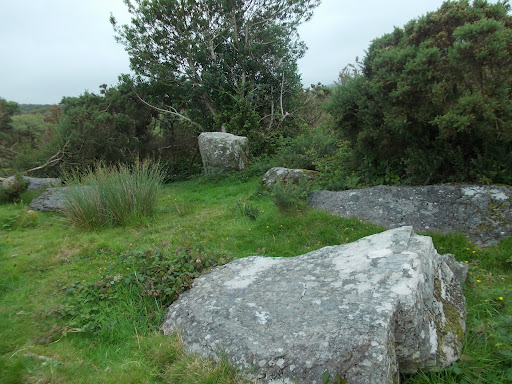
The Mass Stone was crowned with a life size statue of the Virgin Mary and fresh flowers had been laid on the rocks amongst statues of the saints.
There was more thick mud before I made it to the main road into Bantry. It was then a mile long slog along the tarmac cars and lorries rushing past. Not surprisingly the walk had taken longer than expected, about 2 ½ hours. I paid back the man on the Gubbeen stall from the previous week when I had forgotten my money and bought more cheese, sausage and a 5Euro bag of haddock for lunch and supper that evening.


I made fish fingers with the haddock. Cutting the fish into slices about an inch thick. The breadcrumbs took a while to make, cutting up the stale bread in the tin, toasting it in a low oven for half an hour (whilst I went up to the pub for a pint), once is was crisp and hard grinding it down to a crumb in a bowl with a piece of wood, sieving it to make sure it was fine. I seasoned the breadcrumbs with smoked paprika, salt and pepper.
I then lined up three bowls, the first with flour, the second with two eggs lightly forked and the third with the breadcrumbs.  I then floured the slices of fish, dipped them in the egg and covered them with the breadcrumbs.  Once they were all done I heated an inch of sunflower oil in a pan until it made a pinch of the breadcrumbs sizzle and I fried them all off.

20 minutes and a kilo of shrimp

If you have 20 minutes to spare and a bowl full of cooked shrimp in the fridge you could do worse than use that time to peel the shrimps and pot them with melted butter.
The shrimps had come from Tommy on Monday. The season for them has just started.  Over the weekend his boat had been criss-crossing Kitchen Cove laying the pots edging gently close to the rocks at low tide. Orange buoys now dot the water and the bottom of must be dense with the blacks pots and line.
The cove is fed by a number of streams that come down from the hills including Akakista stream that runs between Arundel’s Pub and the big house. The fresh water, particularly if there has been heavy rain, makes the shallow waters of the cove brackish and brown.  In August the waters warm up and create a bloom of the tiny organisms on which the shrimp feast and grow.
Tommy’s boat came in at around 3.00pm and I wandered down the pier to see what he had. He was putting four blacks trays of shrimp into the back of his van. He sold me a kilo for 10Euro shoveling them into a plastic shopping bag with his hands.  Plastic bags have become an important currency on the pier now that they have been banned. It is a good idea to keep one in your pocket so it is to hand if a fisherman comes in with boxes of something he is willing to sell.


I put the bag of shrimp on the side in the kitchen and took a metal pan down to the rock pools to fill it with salt water. This only took a few minutes to come to a rolling boil. I put the shrimp into the sieve and from that poured them into the pan of boiling water.


Some of them twitched to get away and fell onto either the oven or the floor and had to be picked up quickly and thrown into the pan.  Thirty seconds later they were done to subtle pink and I drained them in the same sieve they had just come from and left them to cool.


We had some that evening with homemade garlic mayonnaise sat round the table on Curly’s Corner the sun going down peeling off the hard shells to the small nibble of pink flesh underneath.
The next day most of the shrimps were still in their bowl in the fridge. Late in the afternoon there was a cool edge to the wind although the sun was still out. I took the bowl of shrimp outside and spent 20 minutes peeling them


Back in the kitchen I packed the peeled shrimp into two small glass bowls and melted a pat of butter in a small metal pan. I ground up half a teaspoon of coriander seeds with a clove of garlic, sea salt and a few shakes of smoked paprika all wetted with a drop out of a bottle Pernod and plenty of ground black pepper. This was all poured equally over the two bowls of shrimp and they were all put in the fridge to cool.


An hour or so later I made some toast with some of the old bread from the bread tin and smeared them with the potted shrimps, the butter melting into the hot toast.
We ate them around the fire on the beach

Lunch at Hackett’s

Hackett’s is one of those pubs you walk into and you know that there will be an hour during the course of any given Saturday night that it will be the best bar in the world. The bar is tight with a door that opens out onto the Main Street in Schull. Three or four bar stools and behind those two tables with benches against the wall and on the wall pictures by whichever local artist they are helping to promote that summer.  Round the corner two other tables including one with a window that opens out to the back of the bar.


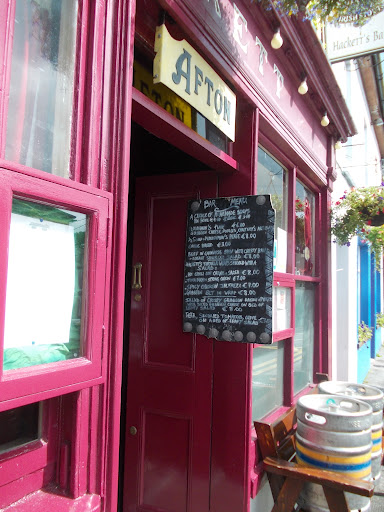
My eye was caught by the place years ago as we walked past and I saw the blackboard menu outside with a Gubbeen Bacon BLT marked clearly in white chalk. We didn’t go that year but I was determined we should do so.


It was the next year we went for the first time and sat at one the tables in the backroom. There was some complaining from the kids that they should be going here rather than fish and chips on the pier but the weather was grey and inside a pub was better.  I had the Gubbeen BLT and there was enough from the rest on the menu, particularly with the Red Soup and garlic bread to keep the kids happy.
Vaguely cool music came from the bar and we sat and I had a three pint lunch enjoying the very feel of the place, the black wood and the pictures on the wall and the taste of Gubbeen bacon.
We have not been back every year since but I do always try and pull the family in and there has been a slow acknowledgement that it is quite good.
We went back today although there was a squeal of protest and a demand that we should all be eating at the tapas place that has opened where Annie’s cake shop used to be. The squeals were eventually muffled with a promise that pudding would be got from Gwen’s Chocolates’.
We settled at the table by the window at the back of the bar and the kids squabbled over their order although most settled on a bowl of Red Soup and those that didn’t wished that they had. This year the BLT came in a wrap. I was slightly worried by this as I ordered it but it was very good. Three thick chunks of Gubbeen bacon with mayonnaise and tomato and a plateful of salad.  The kids even recognized some of the music that was playing.


There was a man at the bar with a 5 day stubble and ginger moustache finishing off another pint of lager. He asked me how I was and I said I was fine. He told me that he was happy but that he could talk about the serious stuff too about the Civil war and all but people did not want to hear about that. We agreed that we were both happy and he showed me how to dance to the slightly disco like music playing from the bar. I agreed that we were having a good holiday and he told be that he lived in Goleen. He wished me well as I took my pint back to the table.
As I sat down the barman put his head through the window to apologise for the man with a ginger moustache – he spent his day moving from pub to pub along the Main Street and no one could clear a bar faster with his Elvis impressions. I wished I had taken the time for a longer talk.


After lunch the kids bought lumps of chocolate from Gwen’s which has now expanded into a café across the street.
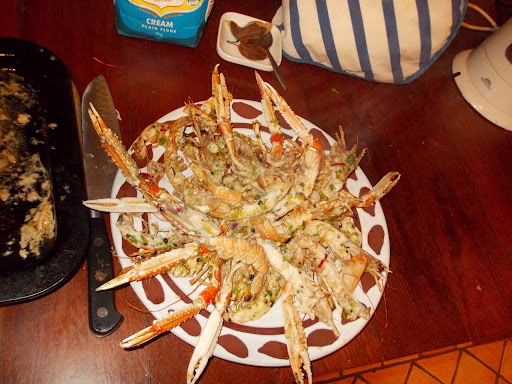
For supper I bought the remaining prawns from the fish shop and we walked down to look at the speedboats and nets by the pier.


That evening we went for a walk before supper up along the low hills that lead to the farmhouse where Curly O’Brien used to live. The weather was grey and spits of rain came in from the bay.

We ate the prawns listening to Shelby Lynne.