Gubbeen chorizo and a side-note about mussels

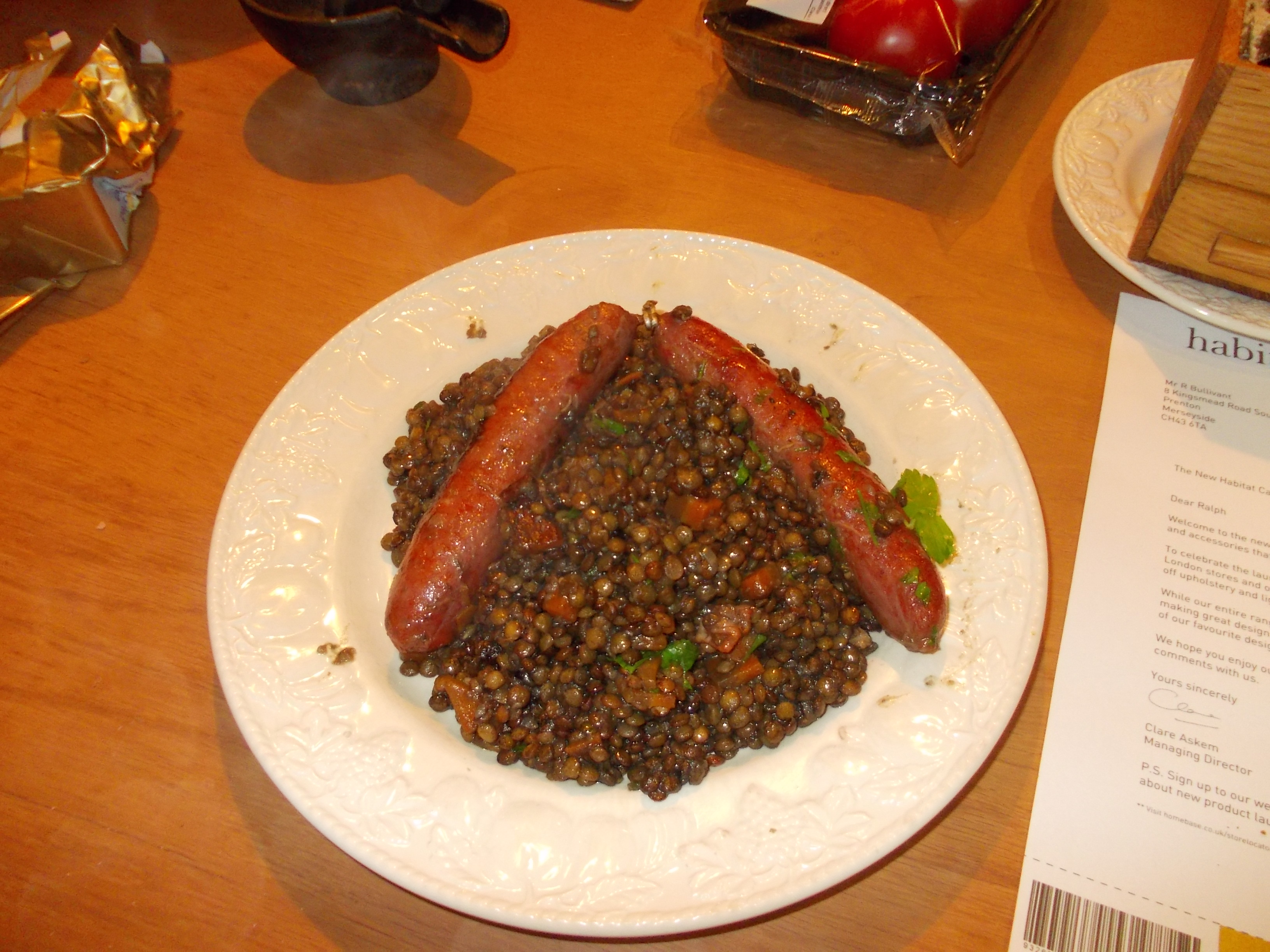
This evening I cooked the last of the Gubbeen chorizo sausage left from the cheese fair we had at the end of September. I had smuggled it out at the end of the afternoon, the last pack of sausage in the basket. Since then it had lurked at the back of the fridge, not quite forgotten, waiting for a Friday evening when I was feeling the pinch.

It was simple enough to pull together. Chorizo always loves lentils. So I started with some finely chopped onion in olive oil to which I had a couple of squashed, crushed cloves of garlic and a small carrot cut into pieces not much bigger than a lentil.

After that had cooked through on a high heat for a few minutes I emptied into the pan the lentils, two good handfuls from one of the two packs in the cupboard. All it needed then was a bay leaf and lots of water before being left to boil until the lentils were cooked.

Whilst the lentils were cooking I fried off a chopped rasher of bacon in some oil and allowed the chorizo sausage to gently cook through. The lentils took about half an hour. There can be a tipping point with lentils between a mush and a small forgiving pod with some bite left. We got to the right side of that point this evening, the liquid almost cooked down.

So the lentils were added to the pan with the two sausages, seasoned with salt and pepper and left for a few minutes more for the flavours to mingle. Just before serving I stirred in some chopped parsley.

On a side note I spoke to Dad this morning from the Cottage in Ireland. He had just come from the pier where he had been scrapping off the thick folds of mussels which had gathered on the bottom of the pontoon over the last few years. They must have looked so good to eat, perfectly sized nuggets of seafood. He had been warned against them and I reminded him of the harvest we had taken two years ago; they had been as sweet a bowl of mussels you could hope to come across and left some us four hours later criss-crossing the Cottage to the toilets for relief.

Sexing mackerel

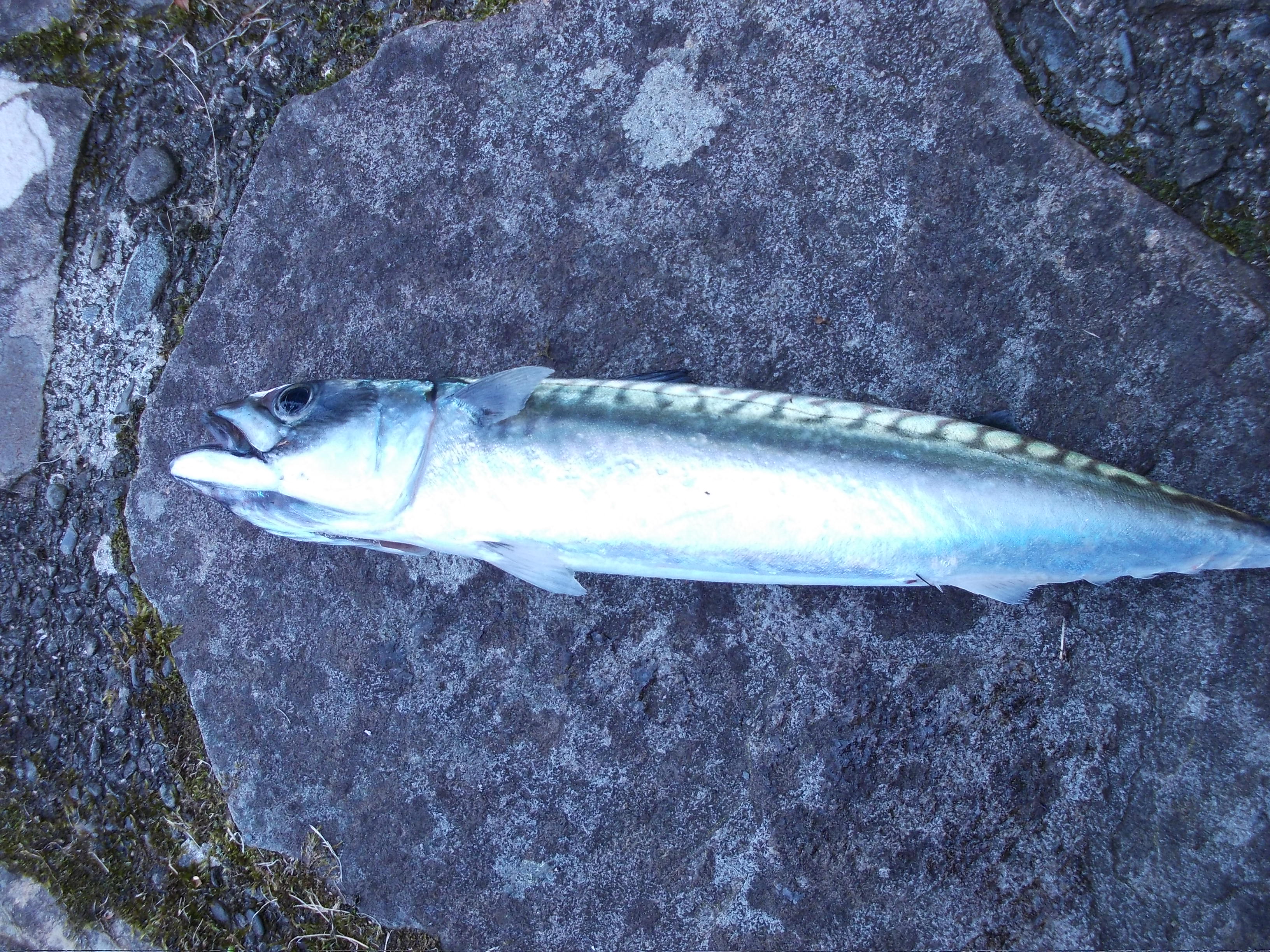
In 1897 Walter Garstang MA. FZS late Fellow of Lincoln College Oxford set about an investigation of a mackerel’s stripes. He was interested in trying to establish if there was a difference between the populations of mackerel that swarmed through the seas off the coasts of Ireland, England and the United States. He satisfied himself that mackerel taken from American waters differed from those taken from around Europe. Although he was able to describe an Irish race and an English race from Channel and the North Sea the differences in the fish taken from European waters were too slight to be significant.
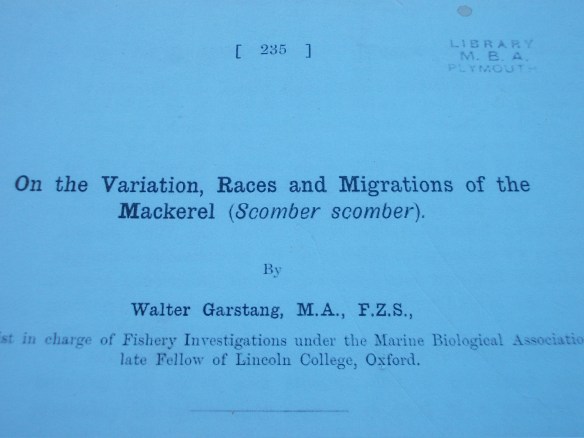
His investigation is perhaps more interesting for his describing of how the fish he eviscerated came to his laboratory in Plymouth and his conclusions as to whether a mackerel could be sexed by its stripes.

As to the source of fish he collected a sample of 1,500 giving instructions that specimens should be forwarded fresh (but damp) by post, if in small quantity; or in seaweed or ice by train, if in quantity. They came as follows:-

October 1897 an excellent sample of 100 fish from Newport, Rhode Island conveyed from New York to Plymouth in the refrigerator of an express steamer of the Hamburg-American Line.

From Brest another 100 fish caught by hook and line and forwarded on ice direct to Plymouth.

Several hundred fish from each of the following regions: the west and South coasts of Ireland, the English Channel, and the North Sea including two Irish consignments dated Kinsale, July 30th and September 3rd, 1897 caught with nets off the Old Head of Kinsale and forwarded by a Mr James Carroll, fish merchant.


He acknowledged that the visera of the fish from Brest and some of the Irish samples were so rotten owing to the delays in transit that it was not possible to record their sexual condition.  One imagines that Mr Garstang had few if any friends at this time.

I first came across the suggestion that mackerel could be sexed by its stripes in a book about British food I was leafing through in a shop. As usual I looked under mackerel heading to see if there was an interesting recipe; there wasn’t, but in the description of the fish there was a bald assertion that it was possible to tell the difference between the male a female fish by the shape of their stripes.

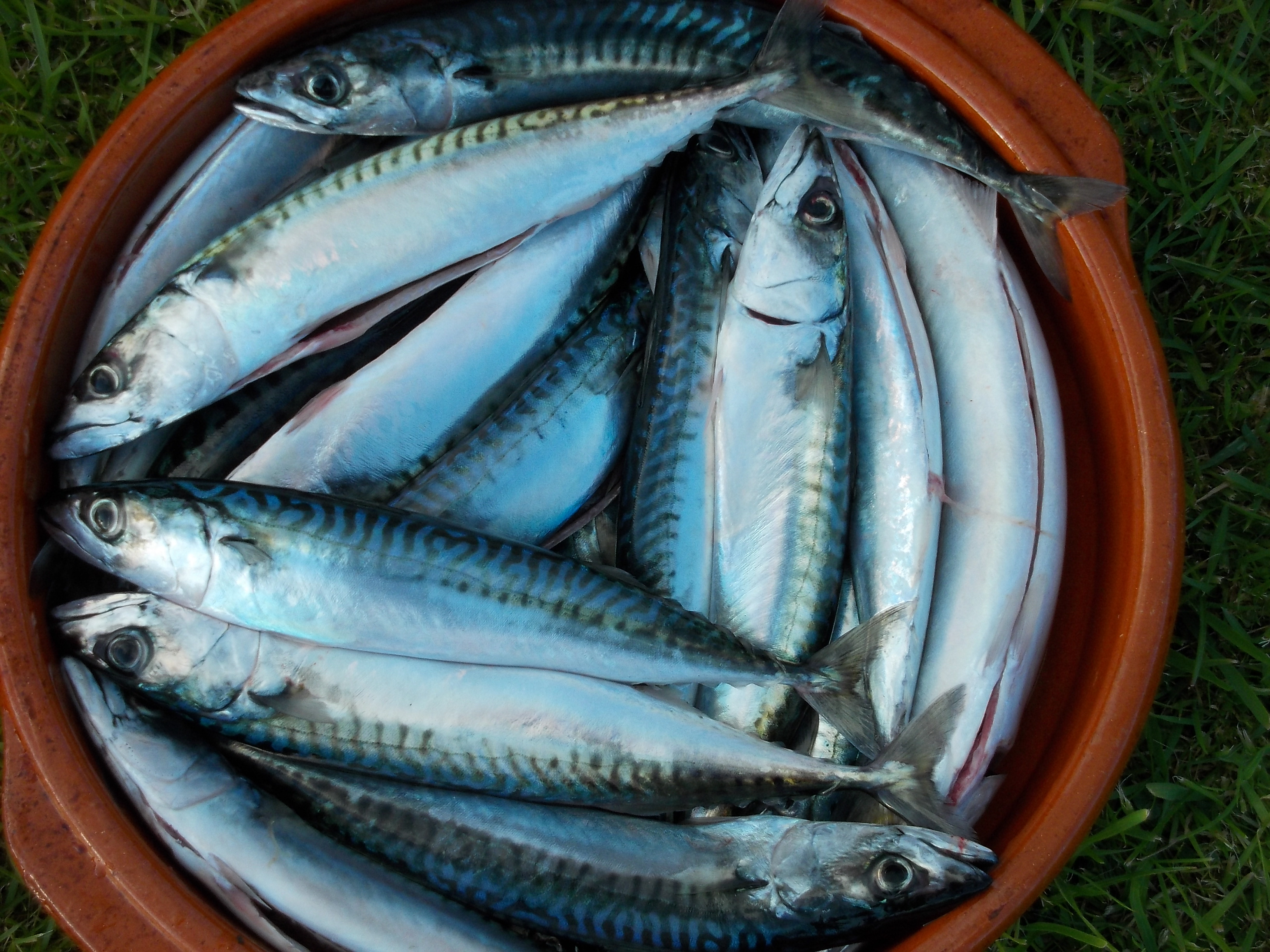
This sounded too good to be true. When we pull them out of Dunmaanus Bay they all look the same. Some maybe bigger than others but the stripes all looked the same angry black scrawl across their backs.

I put the book down but the comment stayed with me and over time I tried to find if there was any truth in the suggestion. I was eventually able to trace the story back to a book by Edward Donovan (1768 – 1837) The Natural History of British Fishes published in 1808. I have not been able to track down a copy of the original book but 40 years later he was quoted in Yarrell’s History of British Fishes as having said “the males have these dark tranverse bands nearly straight; while in females these bands are elegantly undulated.” No further clue is given to the source of the this statement but it would appear to have been taken up as curious remark to be idly included in any short essay on mackerel.

Having examined his 1,500 fish one of the first conclusions Garstang came to was that there is no truth in the tale that it is possible to distinguish the sex of mackerel by the shape of their bars.

Subsequently I put thequestion to Bruce B. Collette, PhD, Senior Scientist, NOAA Fisheries Systematics Laboratoryin the US, who told me by way of a late night email that so far as he is aware there is no scientific data to support the idea that male and female mackerel can be distinguished by differences in their striping. In fact most species of pelagic fishes, including tunas and mackerels of the family Scombridae, show no external differences between the sexes. The dolphinfish is one of the major exceptions to this rule.

Having acknowledged all that it is difficult to think of mackerel as anything else but a male fish. Out of the water and caught in the hand they are nothing but erect and tumescent straining against the restraining clasp.


A good lunch in Shropshire

There are two ways of driving back to Birkenhead from Oxford. The first and easier way is to start on the M40, move onto the M42 before the hard slog of the M6 until you can join the M56 and then the M53 to take you all the way back home in two and half hours of teeth clenched motorway driving. It can be more interesting to find a way to do at least some of the journey cross country and we gave this a try when driving back on Tuesday.

We probably left it too late before deciding on the route that was to take us on the M40 and then the M42 past Birmingham and across the top of the Black Country into the wilds of Shropshire.

Part of the thinking behind all this was how good the autumnal colours would look as we wound our way up to Ludlow and then onto Oswestry. All went well until we got past Kidderminster when a low cloud enveloped the hills and obscured whatever good views might have been available. By the time we crossed over Titterstone Clee we could barely see the side of the road. We carried on past Ludlow and onto Bishops Castle lured on by the thought of a good pub lunch and fine ale.

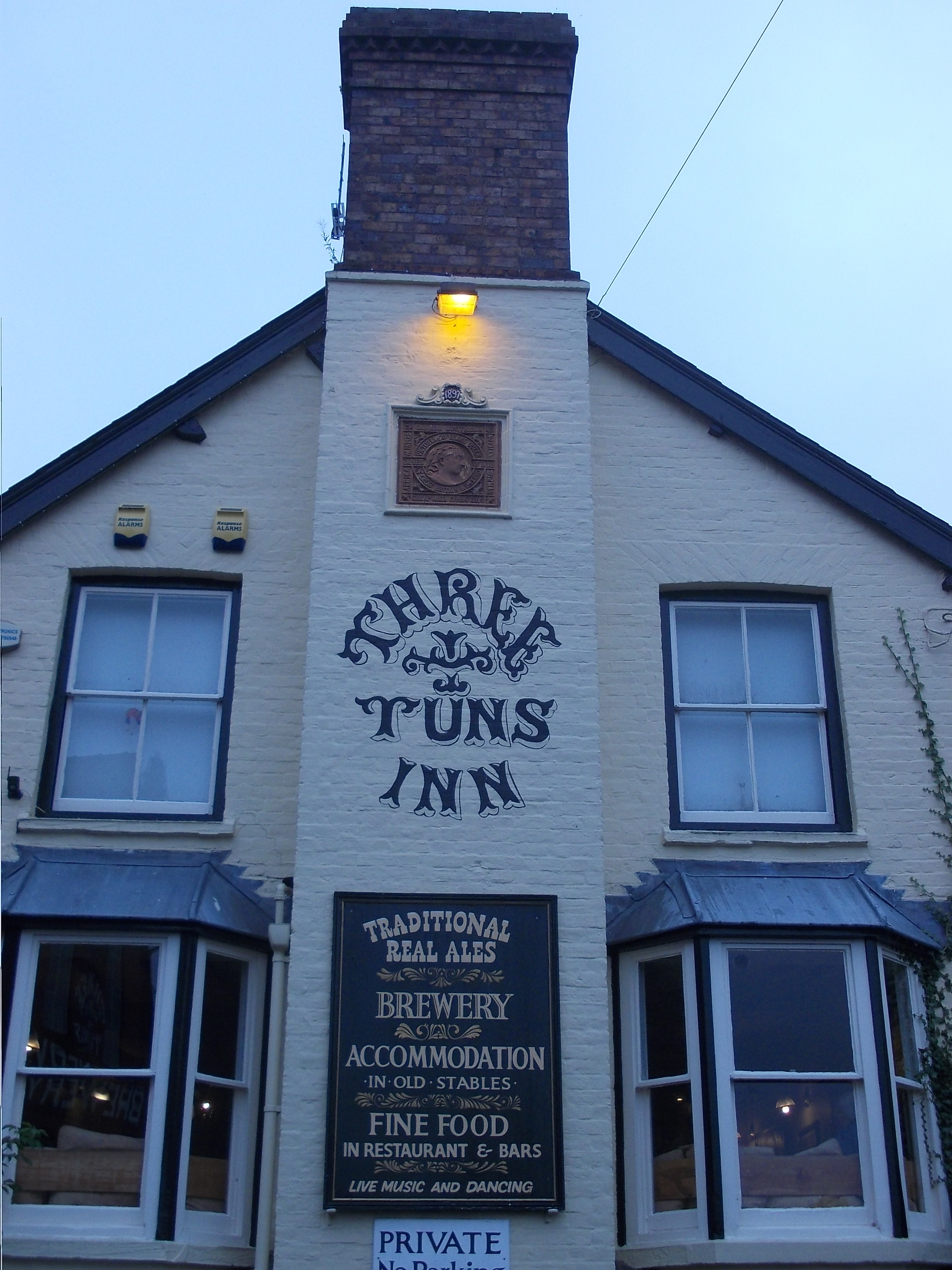
We had stopped off in Bishops Castle two years ago for lunch and somewhere in the back of our minds we had meant to go back, the big attraction being The Three Tuns Inn & Brewery.

It was all that I had remembered. A large cavernous pub perched off the high street, a selection of six different beers on tap from the brewery next door and a menu of good solid pub grub – all with chips. Two of us had the 8oz home made burger with bacon, onion ring and chips. It was far better and far better value than the one had in Byron a few weeks ago. There was also a plate of fish and chips with a bowlful of thick mushy peas.

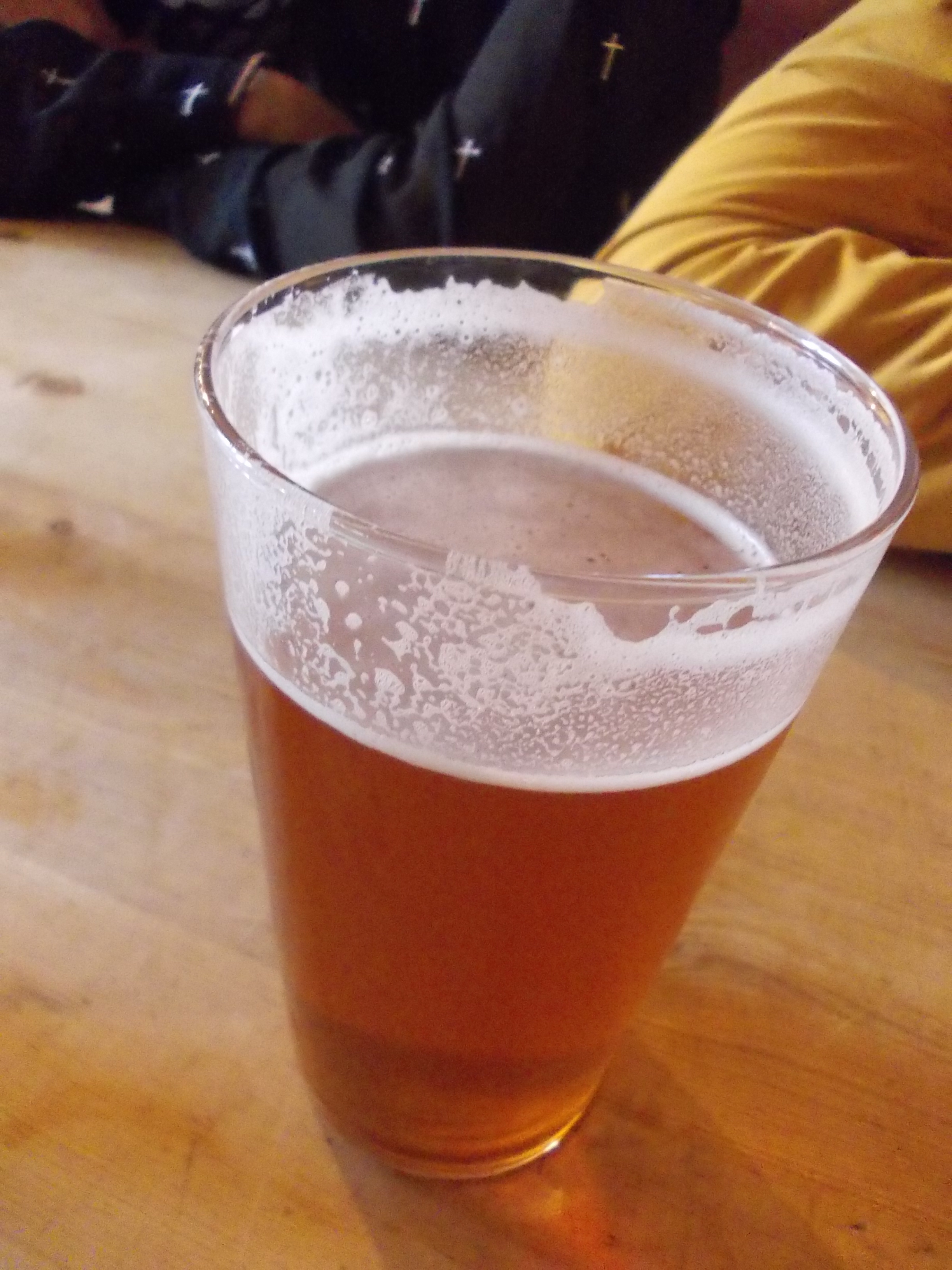
The food slipped down with a few good pints of 1642. Whilst standing at the bar I was reminded that back in the basement at home there were two jugs for beer that they would have filled for me to take back. I resisted the temptation to purchase another.

On the walk back to the car we diverted into a second book shop and I resisted another tempation to pick up a copy of The Folio Edition of In Search of Lost Time  for the bargain price of £30.00.

Old haunts

When we moved from Oxford to Liverpool almost eighteen years ago I would joke that there were no more two different cities in the country. The only thing they had in common being the number of listed buildings they both had, with Liverpool slightly ahead.

Over the years the two cities have moved less apart and now it seems there almost as many bemused tourists thronging around Matthew Street as there are on Cornmarket or wandering up Broad Street.

We were in Oxford this last weekend and on Monday we went into the city to revisit some old haunts. We started in the Covered Market which seems to move another step closer to complete gentrification every time we go in with another old shop closing and being turned into a café or card shop. Hayman’s the Fishmongers is still going strong, as is the cheese shop and the greengrocers, and there are still a cluster of good butchers still serving the Colleges.  It is always reassuring to spot a pig’s head through a window. Maybe this is the year I treat myself to making some brawn.

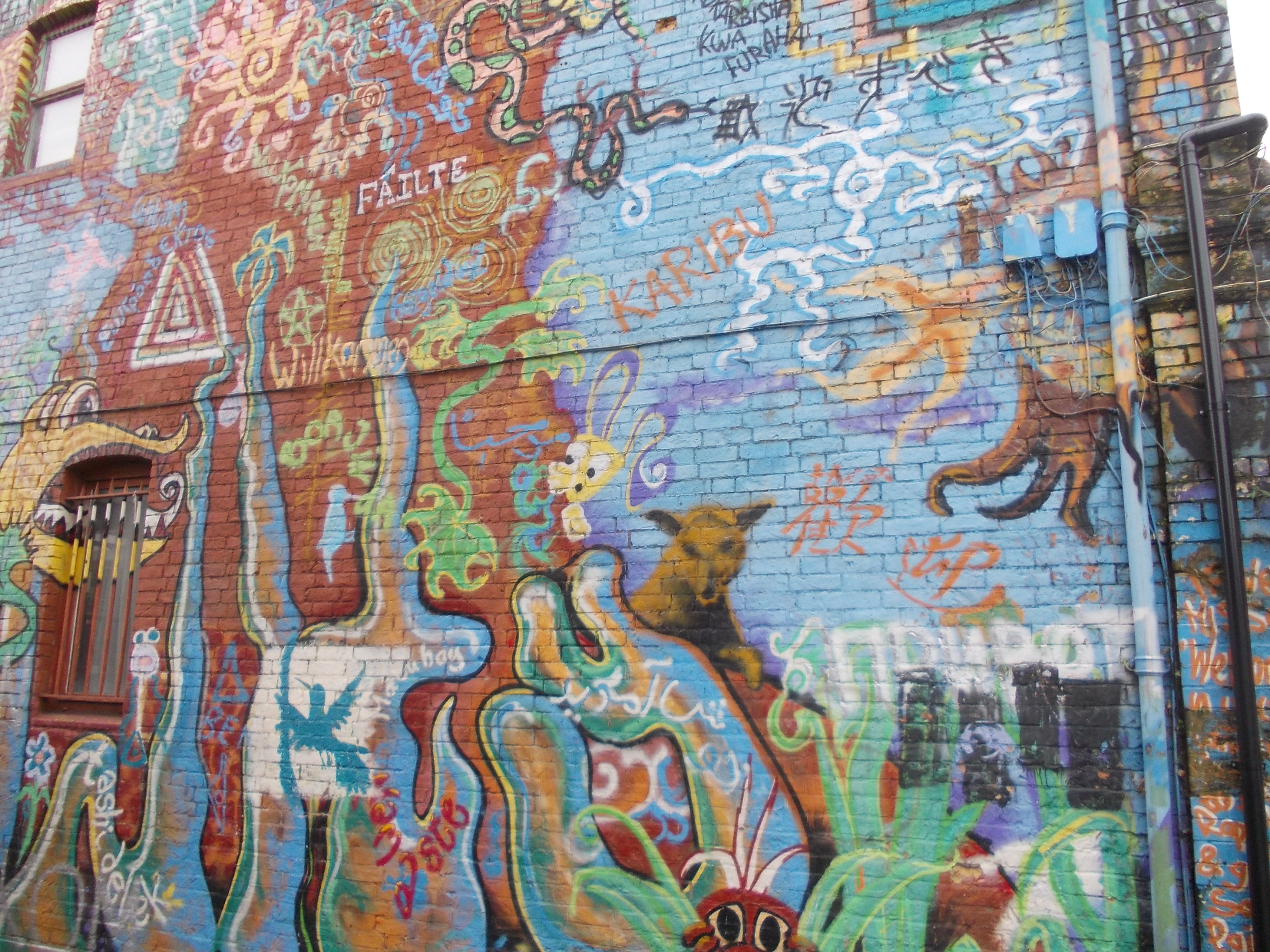
We then walked down The High, over Magdalen Bridge and lingered round the second hand clothes shops on St Clements before traipsing up Cowley Road. Although I have driven down it a few times since we left I think this was the first time we had walked up it. It was at once instantly familiar in its geography and layout, the cars negotiating the side streets, the ever present bikes threatening to run you down, but also hugely different. It was spruced up and cleaner, trees had been planted in the pavement and almost all of the shops and restaurants had changed. The only two that were still there as I remembered them were Uhuru , the health food shop and The Hi-Lo Jamaican Eating House.

But the good news was that although they were operating under different signs and names the road was still packed with individual shops and restaurants. There seemed to be far fewer curry houses, I remember counting 17 one day on the way into town on the bus, but they had been replaced by Lebanese, Greek, Morrocan and Turkish restaurants. There were two very good Middle Eastern food shops both of which were selling packets of Giant Couscous or Mograbiah.  I don’t like to pass up on the opportunity to stock up on Mograbiah when I see it so I bought 3 kilos.

We made it all the way up to the junction with East Avenue at which point we turned back as the kids were demanding lunch. It was strange to linger outside the old Co-op Hall which had been a rather tatty room but which had now been smartened up to a proper venue. Amazing to think that only a couple of hundred yards from were we lived we able to walk down and see bands such as Radiohead, Supergrass, Therapy, Gong and Giant Sand (twice!).

With hungry and recalcitrant children to be kept on side lunch was in a Nando’s.  For some of us it was our first chance to indulge in the whole peri peri experience. The verdict was probably that it could have done better but was not as bad as we had feared.

On the way back into town there was just about time for another short diversion into a record shop with second hand vinyl, good coffee and a relaxed atmosphere this would have been a home from home eighteen years ago. As it was there was a quick grab of CD’s that caught my eye – Dirty Projectors on the back of a review in one of the Sunday papers and something by someone called Carl Rowe described as a mix of Tom waits, Leonard Cohen and Mark Lanegan.